


As concerns rise and hearings are held in the US about the cryptocurrency industry’s effect on the environment, it’s time to address blockchain’s poor sustainability record. The first port of call should be changing how transactions on the blockchain operate – a move which could cut its energy usage by 99.99%.
A cryptocurrency is a digital representation of value that, unlike traditional money, isn’t issued by any central bank or agency. Cryptocurrencies are powered by blockchain technology, which allows the exchange of virtual coins like bitcoin and ether.
Cryptocurrency mining is the process of creating new coins by solving complex mathematical problems. The mining process also validates transactions on the cryptocurrency’s network, proving that they’re genuine.
Crypto transactions are validated in two main ways: using either a “proof of work” or “proof of stake” mechanism.
Proof of work requires miners around the world to compete to complete a maths puzzle. The winner is rewarded with a predetermined amount of cryptocurrency and the ability to validate their transaction.
In proof of stake, cryptocurrency owners validate blockchain transactions based on the number of coins they stake. In other words, cryptocurrency owners are required to put up their own cryptocurrency as collateral for the opportunity to successfully approve transactions.
Proof of work is more secure than proof of stake, but it’s slower and consumes more energy. The mining activities of pioneering blockchains like Bitcoin are based on proof of work and thus use enormous amounts of energy. But switching transactions to proof of stake has the potential to dramatically cut emissions.
Although renewable energy is now being used to power some cryptocurrency activities, that energy could surely be put to better use elsewhere: for example, to power homes or businesses. Instead, if blockchain transactions were verified through proof of stake – a move that Ethereum is planning to make – their energy consumption could be reduced to 0.01% of its original value.
Emissions
The estimated power needed to run the Bitcoin network across the world is an extraordinary 7.46 gigawatts (GW) per year. For comparison, in 2020 an average-sized nuclear plant produced around 1GW of electrical power in a year. The energy required for just one bitcoin transaction could power the average US home for
for more than 70 days.
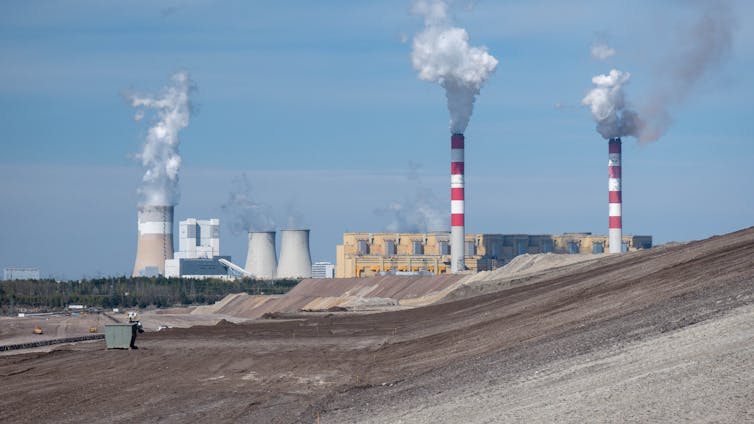
As the US committee heard, a bitcoin transaction adds around 400kg of CO² to the atmosphere (assuming it’s powered by an energy mix typical of the UK, of which around two-thirds comes from fossil fuel).






0 Comments